Hydraulic Cylinders are the heart of industrial machinery. With correct
maintenance practices, you can extend cylinder life by up to 40%,
prevent
unexpected failures, and significantly reduce operational costs. In this guide, we share
all
the critical steps of hydraulic cylinder maintenance based on our 25+ years of field
experience.
Important Information
The average life of hydraulic cylinders is 8-12
years.
However, in systems without regular maintenance, this period can drop to 3-4 years.
1. Importance of Hydraulic Cylinder Maintenance
Hydraulic cylinders are precision engineering products operating under high pressure.
In these systems operating in the range of 250-350 bar, even the
slightest
neglect can lead to serious malfunctions and production losses. Implementing a periodic
maintenance program provides up to 60% savings from reactive
(post-failure)
maintenance costs.
The consequences of neglected maintenance include internal leaks, piston scoring, seal
damage, and in the worst-case scenario, cylinder burst. Therefore, a systematic
maintenance
program is a fundamental requirement for safe and efficient operation.
2. Periodic Maintenance Steps
2.1. Daily Checks
- Visual leak check (rod,
cap, connection points)
- Abnormal sound and vibration
detection
- Operating temperature monitoring
(ideal: 40-55°C)
- Movement smoothness and speed
control
2.2. Weekly Maintenance
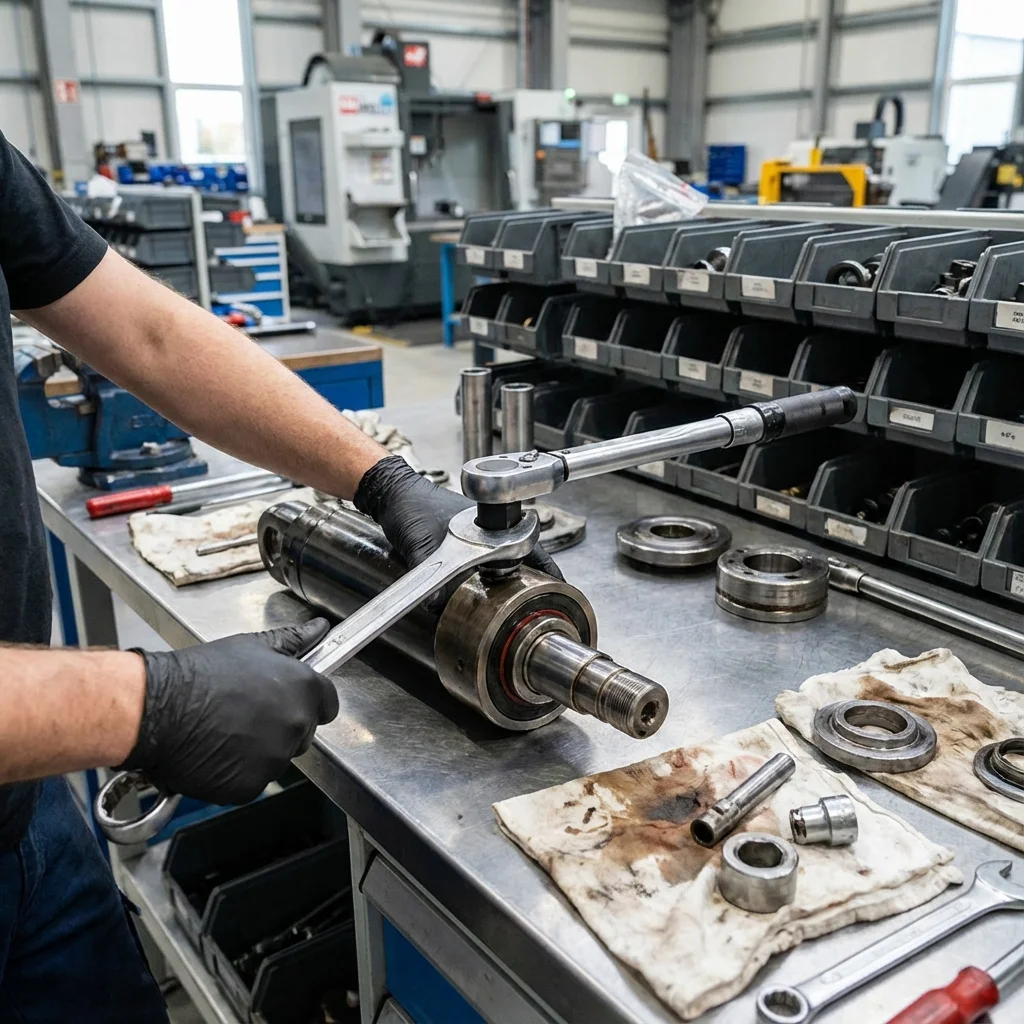
- Tightness check of fasteners
control
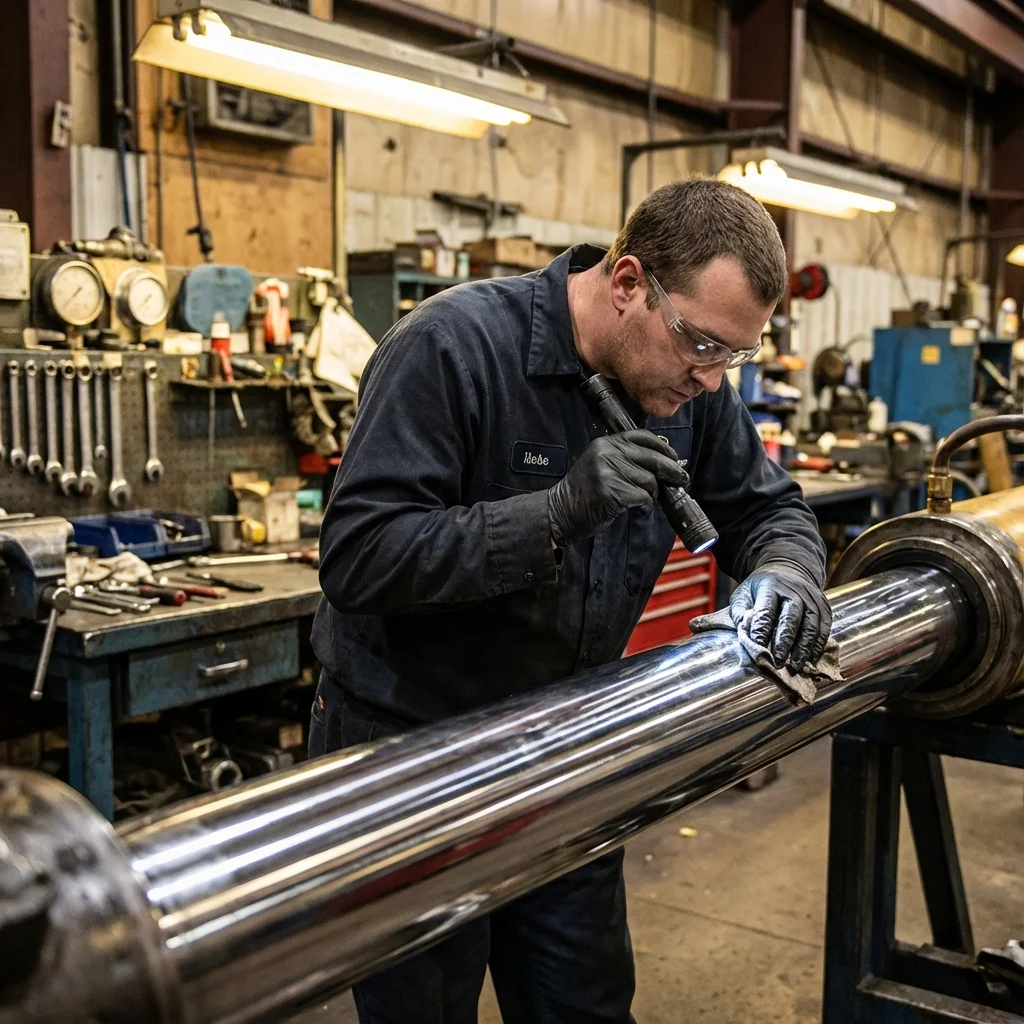
- Rod surface cleaning and
corrosion
control
- Oil level and color check
2.3. Monthly Maintenance
- Hydraulic oil sample collection
and
analysis
- Filter element
check/replacement
- System pressure test
- Seal and gasket condition
assessment
"An
ounce of prevention is worth a pound of cure. Planned maintenance in hydraulic
systems
costs one-tenth of emergency intervention costs."
— BRS PROSES Engineering Team
3. Oil Quality and Analysis
Hydraulic oil is the lifeblood of the system. Oil quality directly affects cylinder
performance. According to the ISO 4406 standard, the oil cleanliness
class
in industrial hydraulic systems should be 18/16/13 or better.
| Parameter |
Ideal Value |
Critical Level |
| Viscosity
(40°C) |
32-68 cSt
|
±10%
deviation
|
| Water Content
|
< 0.1%
|
> 0.2%
|
| Particle
Count
|
18/16/13 |
21/19/16 |
| Acid Number (TAN) |
< 1.0 mg KOH/g |
> 2.0 mg KOH/g |
4. Seal and Gasket Replacement
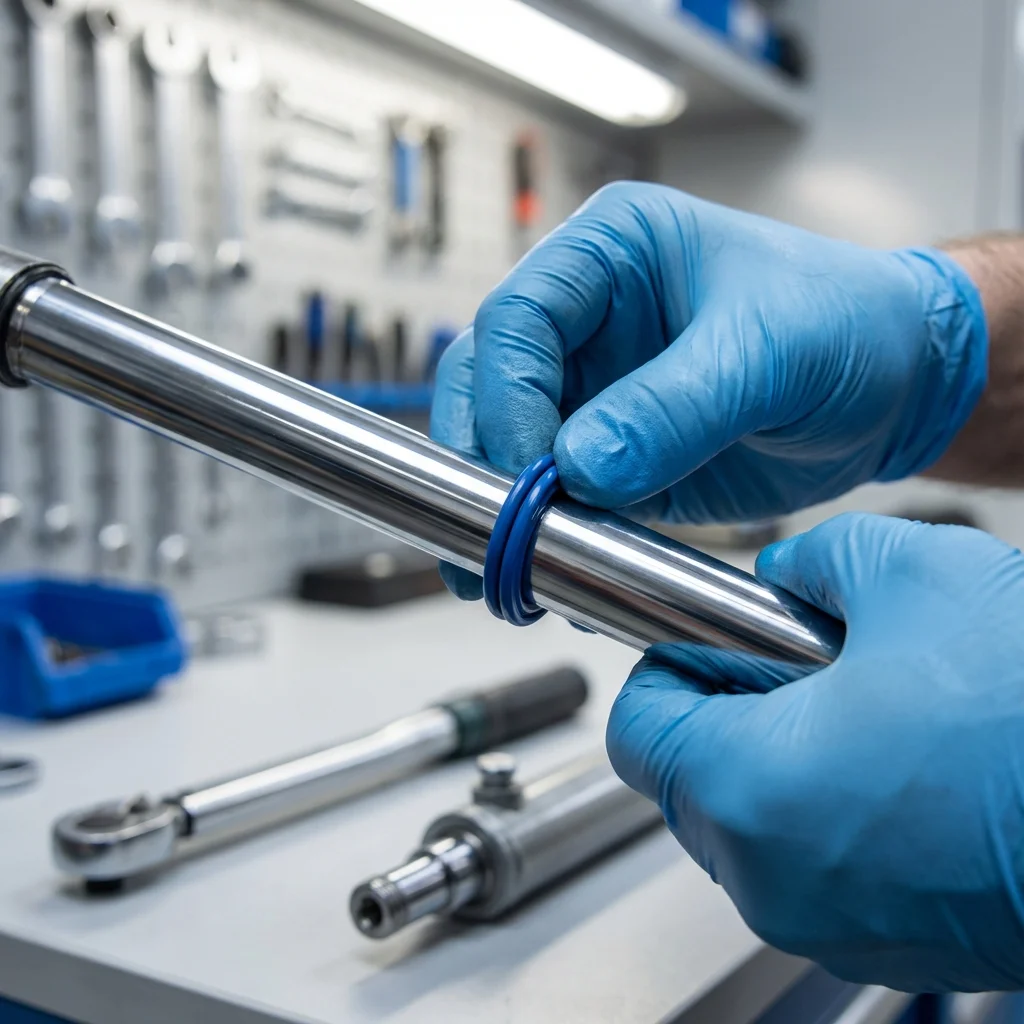
Sealing elements are the most critical components of hydraulic cylinders. NBR
(Nitrile), Viton (FKM), and PTFE based
seals
are preferred for different application conditions:
- NBR Seals: Standard mineral oils, between -30°C
and +100°C
- Viton Seals: High temperature, between -20°C
and
+200°C
- PTFE Seals:Low
friction, wide temperature range, -200°C to +260°C
5. Failure Symptoms and Solutions
Symptoms to Watch Out For
- Slowing or irregular movement
- Oil leakage around the rod
- Abnormal operating sound
- Increase in system temperature
- Pressure drop or fluctuation
6. BRS PROSES Maintenance Services
As BRS PROSES, we offer hydraulic cylinder maintenance and revision
services
throughout Turkey. With our expert engineering staff and fully equipped service team:
- On-site periodic maintenance
programs
- Complete cylinder revision in
our
workshop
- Oil analysis and filtration
services
- Original seal and spare part
supply
- 7/24 emergency service support
7. Dimensional Metrology, Honing Tolerances & Re-Chroming Protocols
When a hydraulic cylinder undergoes major overhaul, visual inspection alone cannot guarantee long-term fatigue life. At BRS PROSES, cylinders undergo precision inner-bore micrometer mapping at 100 mm pitch intervals to detect barrel ovality, taper, or localized bulging caused by transient pressure spikes.
If internal bore scoring is shallower than 0.25 mm, the cylinder tube is re-honed to an ISO H8 tolerance limit (surface roughness $Ra le 0.20 mu ext{m}$, cross-hatch angle 45°–55° for optimal micro-oil retention). Scratched piston rods are precision-ground, pre-heated to relieve residual stress, and deposited with a 25–30 μm hard industrial chromium layer (hardness 66–70 HRC) before undergoing final superfinish polishing to an ISO f7 tolerance.
| Component Inspection |
Acceptance Threshold |
Corrective Remanufacturing Action |
| Tube Bore Ovality |
≤ 0.04 mm / Ø100 mm |
Vertical/Horizontal CNC Honing to oversize seal group |
| Rod Runout / Straightness |
≤ 0.15 mm per 1,000 mm stroke |
Hydraulic press straightening or raw 42CrMo4 replacement |
| Weld Heat-Affected Zone (HAZ) |
Zero crack indication under NDT |
Magnetic Particle Inspection (MPI) + Ultrasonic Testing |
| Gland Bushing Clearance |
0.05 mm – 0.12 mm radial gap |
Machining new CuSn12 bronze or composite guide rings |
8. Hydrostatic Proof Testing (ISO 10100) & Digital Certification
Every remanufactured cylinder must pass rigorous hydrostatic proof testing governed by the ISO 10100 international standard. The cylinder is anchored in a digital test bench, filled with pre-filtered test fluid (ISO 4406 Class 15/13/10), de-aired, and pressurized to 1.5 times nominal working pressure (e.g., 375 bar for a 250 bar cylinder).
During a mandatory 15-minute static hold time, digital pressure transducers log pressure decay curves with ±0.1 bar resolution. Any external weeping through gland seals or internal bypass across piston seal packages is automatically flagged. Test certificates featuring serial-numbered pressure-time graphs are archived and delivered to the client with an EN 10204 3.1 quality inspection release.