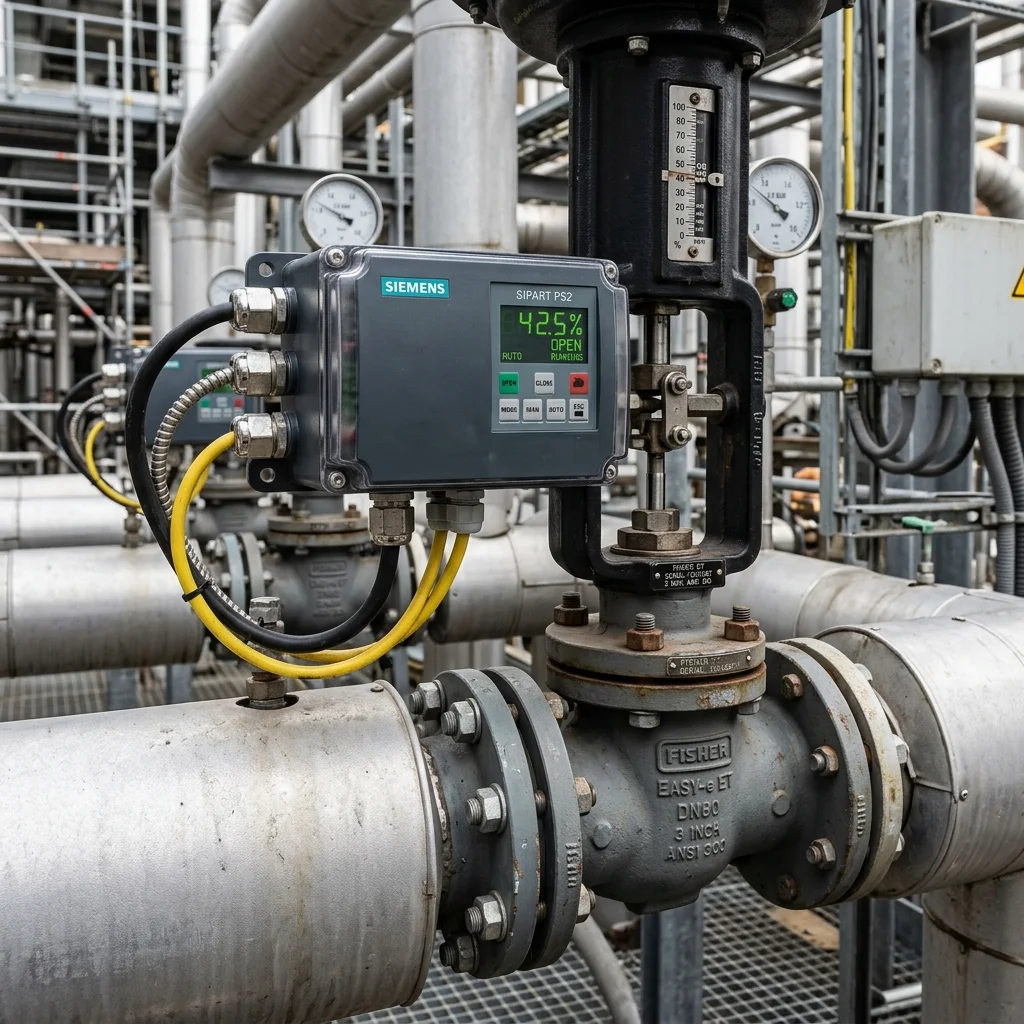
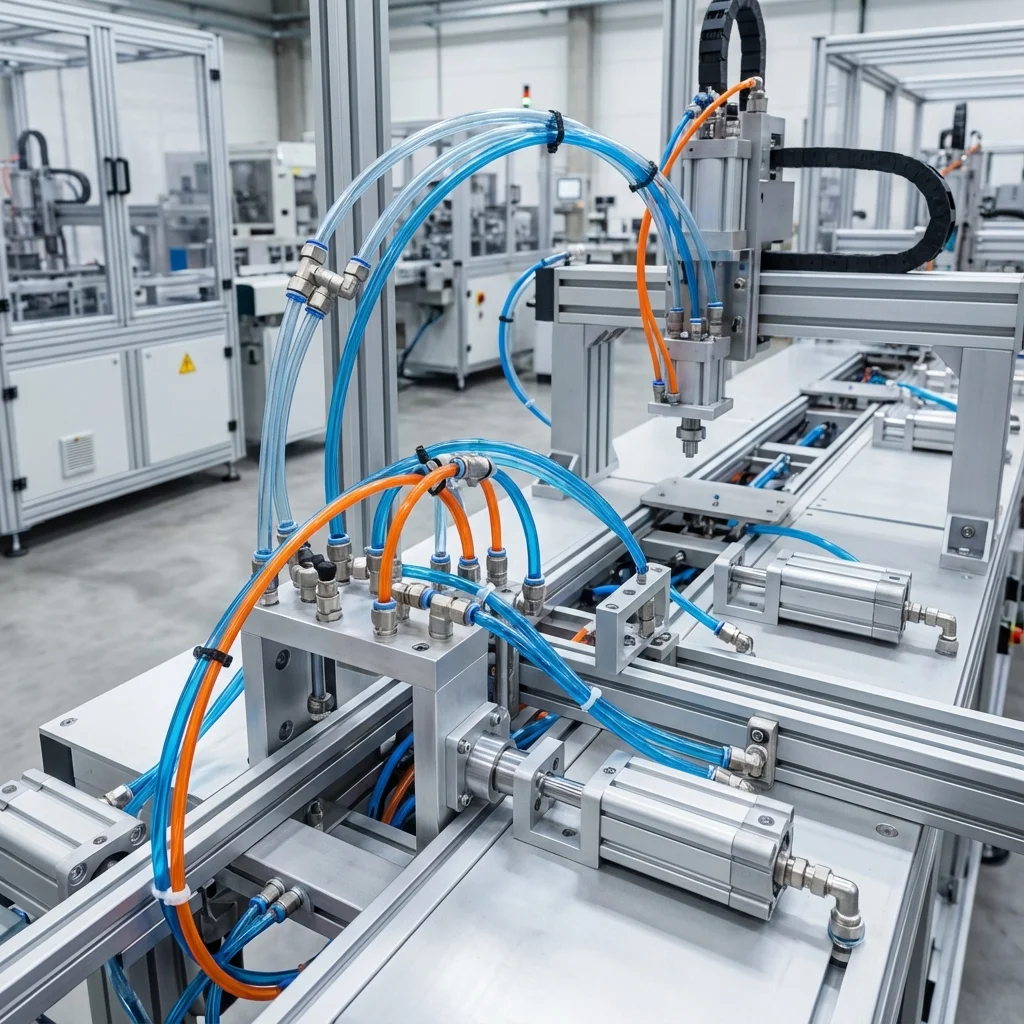
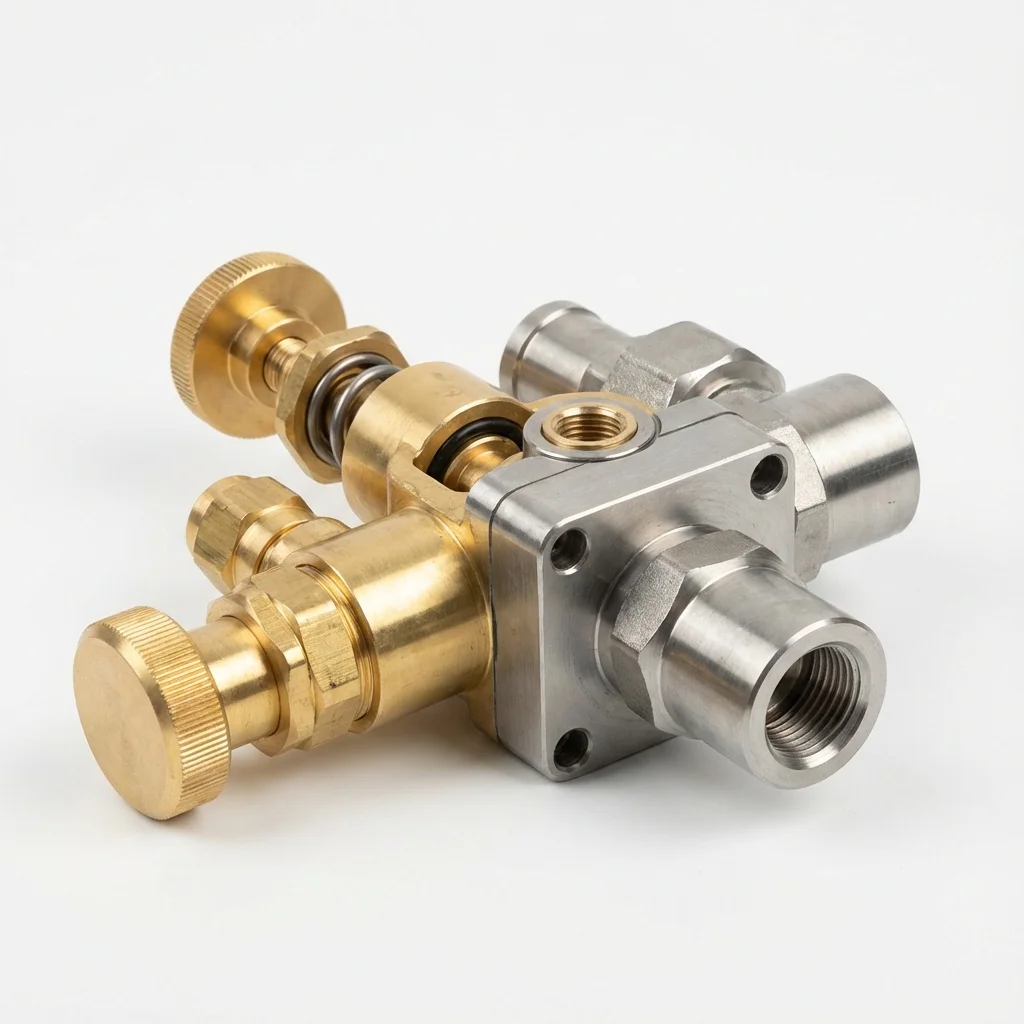
Trying to hold pressure or flow in a process line with a manually-adjusted valve is an expensive habit in the age of automation. Proportional valves change their opening in proportion to an input signal, making that adjustment continuous and automatic.
Basic Signal Range
4-20 mA or 0-10V | Signal size → spool position → flow
1. How Proportional Valves Differ From On/Off Valves
A classic solenoid valve only knows two states: fully open or fully closed. A proportional valve, given an analog signal, gradually changes coil current - and therefore spool position - according to the signal's magnitude.
1.1. How the Analog Signal Becomes Motion
The solenoid inside the valve produces a magnetic force proportional to the incoming current; that force pushes the spool a certain distance, and that distance determines flow. When the PLC signal changes, the valve settles into its new position within a few hundred milliseconds.
| Characteristic Type | Low-Opening Behavior | High-Opening Behavior | Typical Use |
|---|
| Linear | Proportional, predictable | Proportional, predictable | Constant pressure drop |
| Equal Percentage | Precise, fine control | Stable, wide range | Variable pressure drop |
| Quick Opening | Rapid flow increase | Limited extra control | Mostly on/off use |
2. Advantages in Process Automation
- Precise Flow Control: can hold flow within 1-2% precision, decisive in color-critical processes like painting
- PID Integration: working with pressure/flow feedback, corrects setpoint deviation within seconds
- Remote Adjustability: setpoint can be changed via SCADA/PLC without operator intervention
"A proportional valve removes the wait for 'the operator to notice and intervene' that manual valves require; the system corrects itself within seconds."
— BRS PROSES Engineering Team
3. Field Challenges
Proportional valves can stick when fed with dirty or humid air, causing delayed signal response - installation without an FRL unit isn't recommended. If the PLC's analog output card resolution is low (below 12 bit), the precision the valve offers can't be used in practice.
4. BRS Proses Proportional Valve Integration
We determine the right valve and sensor combination together based on your existing PLC infrastructure:
- PLC/SCADA compatible valve and sensor selection
- Full installation with FRL unit
- PID loop tuning and field commissioning
- Characteristic curve recommendation based on your process data
6. Closed-Loop Servo-Proportional Dynamics: Spool LVDT & PID State Feedback
In high-precision continuous process automation (slitting lines, dynamic tension controls, high-speed press brake positioning), open-loop proportional valves suffer from flow hysteresis ($approx 3–7%$) caused by magnetic reluctance and fluid flow forces.
High-performance proportional valves overcome this through an integrated linear variable differential transformer (LVDT) tracking the physical spool position with sub-micron resolution. An internal minor closed loop continuously drives the solenoid armature until the measured spool displacement matches the command signal, collapsing hysteresis to under 0.2% and extending cutoff bandwidth to over 70 Hz.
7. Energy Conservation via Load-Sensing & Shock Wave Elimination
Transitioning from bang-bang solenoid switching to proportional flow control eliminates the acoustic and mechanical destruction caused by hydraulic water hammer ($P_{ ext{shock}} =
ho cdot c cdot Delta v$). By generating mathematically smoothed S-curve acceleration ramps, proportional valves protect piping welds, seal glands, and mechanical couplings:
| Performance Criterion |
Discrete On/Off Directional Valve |
Closed-Loop Proportional Valve |
Automated Plant Advantage |
| Acceleration Shock (Jerk) |
Infinite step impulse ($j o infty$) |
Controlled S-curve ramp |
Zero pipe whip, 80% reduction in pipe clamp loosening |
| Stopping Accuracy |
±5.0 mm to ±15.0 mm (Load dependent) |
±0.05 mm with linear scale |
Enables automated workpiece indexing without mechanical stops |
| Pressure Modulation |
Fixed manual spring setting |
Analog 0–10V / 4–20mA or Profinet |
Real-time clamping force adaptation based on workpiece recipe |
| System Energy Waste |
Full pump flow over relief during dwell |
Variable demand metering |
Up to 35% reduction in oil cooler heat dissipation load |
Dynamic Motion Profiles & Closed-Loop Quality Control in Process Automation
Integrating proportional valves into industrial manufacturing lines bridges the gap between hydraulic brute force and electronic servo precision. Modern manufacturing processes—such as hydroforming, high-pressure die casting, and composite sheet molding—require seamless transitions from high-speed velocity control to micro-tonnage force control.
Smooth Transition from Position to Pressure Control (p/Q Functionality)
Using digital onboard electronics with dual feedback (cylinder stroke transducer + pressure load cells), proportional valves execute bumpless switching from position-controlled mold closing to pressure-controlled clamping. This eliminates mold bounce, prevents flashing of liquid alloys, and protects multi-million dollar tooling from shock-induced stress fractures.
Eliminating Mechanical Shock to Maximize Machine Cycle Life
Unlike on/off solenoid valves that produce instantaneous fluid deceleration and hammer surges exceeding 400 bar, proportional spool metering follows continuous S-curve profile curves. Fluid deceleration is executed progressively, reducing stress on welded cylinder mounts, hydraulic manifold blocks, and structural machine tie-bars.